Meet Optimus: Is Tesla's Humanoid Robot Ushering in a New Era of AI Powerhouse?
Camron Baumbach
10/28/2025
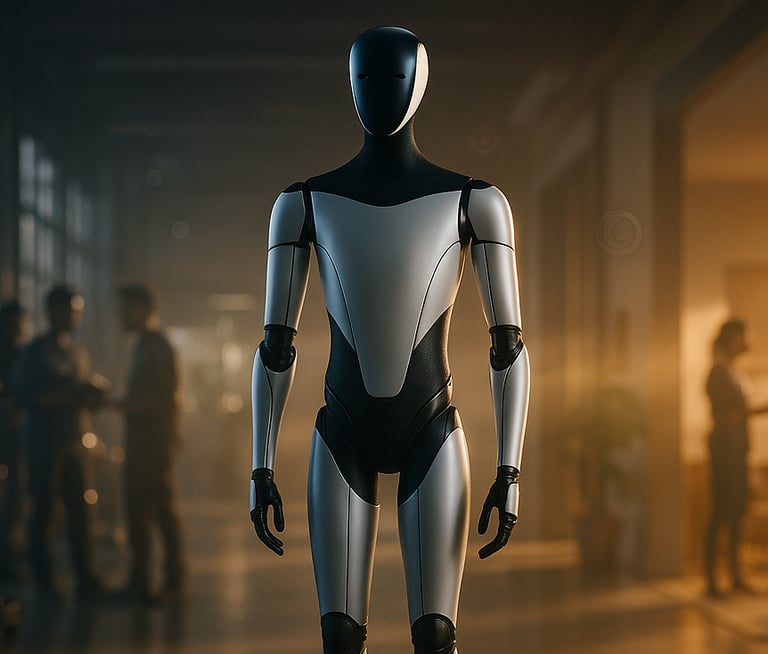
Tesla's Leap into the Future: Optimus Humanoid Robot
The Dawn of Embodied Intelligence
Artificial intelligence, once the stuff of science fiction, has firmly rooted itself in the fabric of modern society. From software that can predict what you're going to type next, to complex algorithms driving fully autonomous vehicles, AI has come a long way. But as we stand at the new frontier of this technology, there emerges a fundamental shift: moving AI from the screen into the physical world in the form of humanoid robots. Enter Tesla’s Optimus humanoid robot.
The Big Reveal
In a move straight out of a futuristic blockbuster, Tesla recently unveiled updates to their Optimus humanoid robot. And let me tell you, it’s not just about androids having an existential crisis or learning to love. This real-life innovation showcases Tesla's ambition to integrate advanced AI into practical robots designed for both industrial and everyday tasks. Optimus aims to significantly augment and transform the traditional workforce, potentially reshaping industries and redefining how we interact with machines on a daily basis.
The Technological Marvels Behind Optimus
Tesla’s foray into humanoid robotics is not simply about making a sleek-looking robot. Underneath its polished exterior lies a complex nexus of cutting-edge AI software and robust hardware capabilities. The much-anticipated reveal of these upgrades speaks volumes about the strides Tesla has made in areas including movement coordination, machine learning, and sensor integration. Imagine a robot that can not only execute intricate tasks but also adapt to changing environments and learn from experiences.
While there aren't yet robots flipping burgers in your local fast-food joint or autonomously styling your hair at a salon (that would be a terrible haircut to remember), the improvements in Optimus indicate we might not be far off from seeing robots as a mainstay in daily human activities.
Why This Matters
The unveiling of Tesla's Optimus robot isn't just a showy tech reveal—it's a potential harbinger of a new era in which AI-powered robots will become key players in both industry and home settings. Unlike software that remains purely virtual, humanoid robotics embody the challenges and opportunities of physical interaction with the world. They could not only enhance productivity but also address labor shortages and perform tasks that are dangerous for humans.
More importantly, Tesla's advancement in AI-driven robotics signals the impending competition—or collaboration—between human and robotic workforces. Will robots take over jobs? Will humans teach, manage, and collaborate with them effectively? The answers are still unfolding, opening exciting and somewhat daunting avenues for exploration.
A Path to a New Society
As Tesla steps boldly into the humanoid robot arena, what becomes clear is that our society is on the precipice of change. AI research has reached a stage where it's moving from screens into the corporeal world, and companies like Tesla are leading the charge. It's necessary to align innovation with ethics and practicality, to mold a future where robots and humans coexist harmoniously.
Whether we view the dawn of humanoid robotics with optimism or skepticism, the main idea remains: Tesla, through Optimus, has unveiled just how close we are to a future where AI isn't just about improving algorithms—but fundamentally transforming the world we live in. And as always in the world of tech, it promises to keep us guessing, and hopefully, a little more intrigued with every passing day.
As the confusion of what to expect from AI continues, let’s embrace this evolution with open minds and perhaps, a healthy dash of cautious optimism. And who knows, maybe one day we can have a robot that can finally explain why we always lose just one sock from every laundry load!